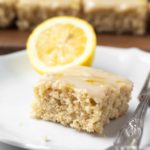
Vegan Gluten Free Lemon Cake
This easy Vegan Gluten-Free Lemon Cake is so simple to make, only 8 ingredients plus a light, fresh and bright lemony glaze to go on top! The cake is really fast, fluffy and tender and is also oil-free!
Servings: 16 servings
Calories: 117kcal
Ingredients
- 1/2 cup (56g) superfine blanched almond flour
- 1 cup (128g) superfine oat flour (I use Bob's Red Mill gluten-free)
- 2 tablespoons (16g) tapioca starch (SEE NOTES at bottom)
- 2 tablespoons (16g) cornstarch
- 3/4 cup (144g) fine granulated white sugar
- 2 teaspoons baking powder
- 1/2 teaspoon fine salt
- 1/2 cup + 2 tablespoons (150g) ROOM TEMPERATURE full-fat coconut milk (THIS cannot be subbed, it replaces all oil/butter and is what makes the cake light and moist, it leaves NO coconut taste) I like Thai Kitchen and Taste of Thai brands, both work great here. DO NOT use the Polar brand, it is all stabilizers and additives and not pure coconut milk.
- 2 1/2 tablespoons (37g) fresh lemon juice + zest of 1 lemon
- 1 teaspoon (5g) vanilla extract
LEMON GLAZE (Use all to glaze the whole cake or half of the recipe to just drizzle over the cake. Delicious either way!)
- 1 cup (152g) powdered sugar
- 1 tablespoon (15g) fresh lemon juice
- 1 tablespoon (15g) thick non-dairy yogurt, plain or vanilla. This gives a nice tang, but if you don't have it, add 1/2 tablespoon of any creamy milk instead.
- 1/4 teaspoon vanilla extract
NOTE
- I always recommend to use a scale for accuracy when baking, following MY gram weights listed, since we all measure differently. This greatly improves your chance for success and lessons room for error. You never need cups or to compare them to the weights, just use the scale and bowl and make sure to hit zero before adding each ingredient. My recipes are 100% tested specifically using my exact weights and your results will turn out as mine this way.
- I use this scale.
Instructions
- Now this step is VERY important to the cake end result. Make sure you are using a fresh can of room temperature, NOT COLD, full-fat coconut milk. With full-fat coconut milk, the coconut cream tends to separate from the water in the can. Scrape out all of the water and cream from the can into a blender or another bowl and either blend it until smooth or whisk very well until completely smooth and mixed. If you do not do this first, you run the high risk of either getting too much cream or too much water and not the right mixed combo of each, will be really affect the cake’s texture. After it’s mixed and smooth, then measure the correct amount of milk needed for the cake.
- Preheat the oven to 350°F (177°C) and lightly grease an 8x8 square stone baking dish. Wipe off any excess runny oil. Stone is best for a soft cake around the edges, but if you don't have one, use glass or metal. The edges will cook a bit more in these types of pans.
- Add the oat flour, almond flour, starch, sugar, baking powder and salt to a large bowl and whisk well to break up any lumps that can form from the almond flour or starches.
- Add the coconut milk, lemon juice, lemon zest and vanilla to a separate bowl. Pour the liquids over the dry and whisk very well until mixed and a smooth batter forms. The batter is always quite runny, not thick. However, many readers have told me their batter is quite thick, so this can be due to quite different brands of almond flour and environments or cold weather, moist air, etc. I'm in humid Houston, TX so my batters are always more on the runny side. If you weighed accurately with a scale, you should still get a great result.
- Pour the batter into the baking dish. It will be kind of low, but the cake will really rise and fluff up while baking. Bake for 20-25 minutes or until a toothpick comes out completely clean. Mine was perfect at 23 minutes. The cake will bake up perfectly flat on top.
- Cool the cake 45 minutes or so until completely cooled before glazing.
- To make the glaze, add the ingredients to a small bowl and whisk for a few minutes until it's completely smooth and no lumps remain.
- Pour all of the glaze over the center of the cooled cake. Use the back of a spoon or an offset spatula and spread it out evenly all over the cake. Zest some more lemon over the top for presentation and extra zing of flavor. Let the glaze firm up a bit (15 minutes or so) and then slice and serve. This cake is fantastic even the next day, if not even better! Store it at room temperature in the same dish covered with a lid or foil. It will stay fresh 2-3 days.
Notes
- FLOURS: As noted, superfine flours work best. Homemade almond flour or oat flour tends to never be as fine as store-bought, and a bit more gritty, which will result in a more dense cake that is not very fluffy. Superfine almond flour is necessary so there are not bits of almond throughout or a wet/dense cake. I like the King Arthur flour, Wellbee's, Honeyville, Nature's Eats and Nut's.com brands best. They all work well.
- STARCH: I tested this recipe using all tapioca and also a version with all cornstarch. I found the cornstarch made it a tad drier and a tad more crumbly and the tapioca made it a bit more chewy than I like, so I did a final test using half of each and loved the result. Moist but also held its structure perfectly! But if you only have one, it is fine to use it, just keeping in mind my notes on the slight variance in texture.
- SUBS: This was heavily tested to make a delicious gluten-free version of my original Easy Vegan Lemon Cake that is divine and so fluffy, so please follow this for the best results. I tested 7 or 8 different versions with different flours and truly none of them were as good as this one. Baking is very scientific and adding gluten-free to that becomes every more scientific, so switching out flours just doesn't work well in most cases. This is because EVERY single flour performs differently in baking. This version is not quite as fluffy and light as the one with white flour of course, but still soft and fluffy and really delicious.
- BAKING AT HIGHER ALTITUDES: There are a few people saying their cake didn't rise, or sunk and live at higher altitudes. Please understand all my recipes are tested living at around 100 feet above sea level (Houston, TX) so I can only share what and how my batter, looks, how recipes bake, etc. for how they perform here. I am a perfectionist at testing multiple times before I post a recipe, so I guarantee the recipe works when followed correctly and in the right environment. Sadly, I can't give advice on higher altitudes since I don't live in them or have experience with them. Since baking is so scientific, meaning, for things to turn out as the recipe is shared and shown, every single detail is important for baked goods to work. The air pressure, moisture everything come into play. Even during colder weather or hot weather, batters will vary, and affect how they bake up. Here is a guide on higher altitude baking that may help. Again, since this recipe is oil-free and gluten-free, I don't know how well the guide will work, but hopefully it can help! Lastly, different brands of almond flour will vary in their texture, as well as coconut milk brands. This also can affect the texture of batters and the end result, which is why I always note and recommend which brands I use, if possible!
Nutrition
Serving: 1slice | Calories: 117kcal | Carbohydrates: 18.1g | Protein: 1.6g | Fat: 4.6g | Saturated Fat: 2.3g | Sodium: 62mg | Potassium: 120mg | Fiber: 1.4g | Sugar: 9.6g | Calcium: 42mg | Iron: 1mg